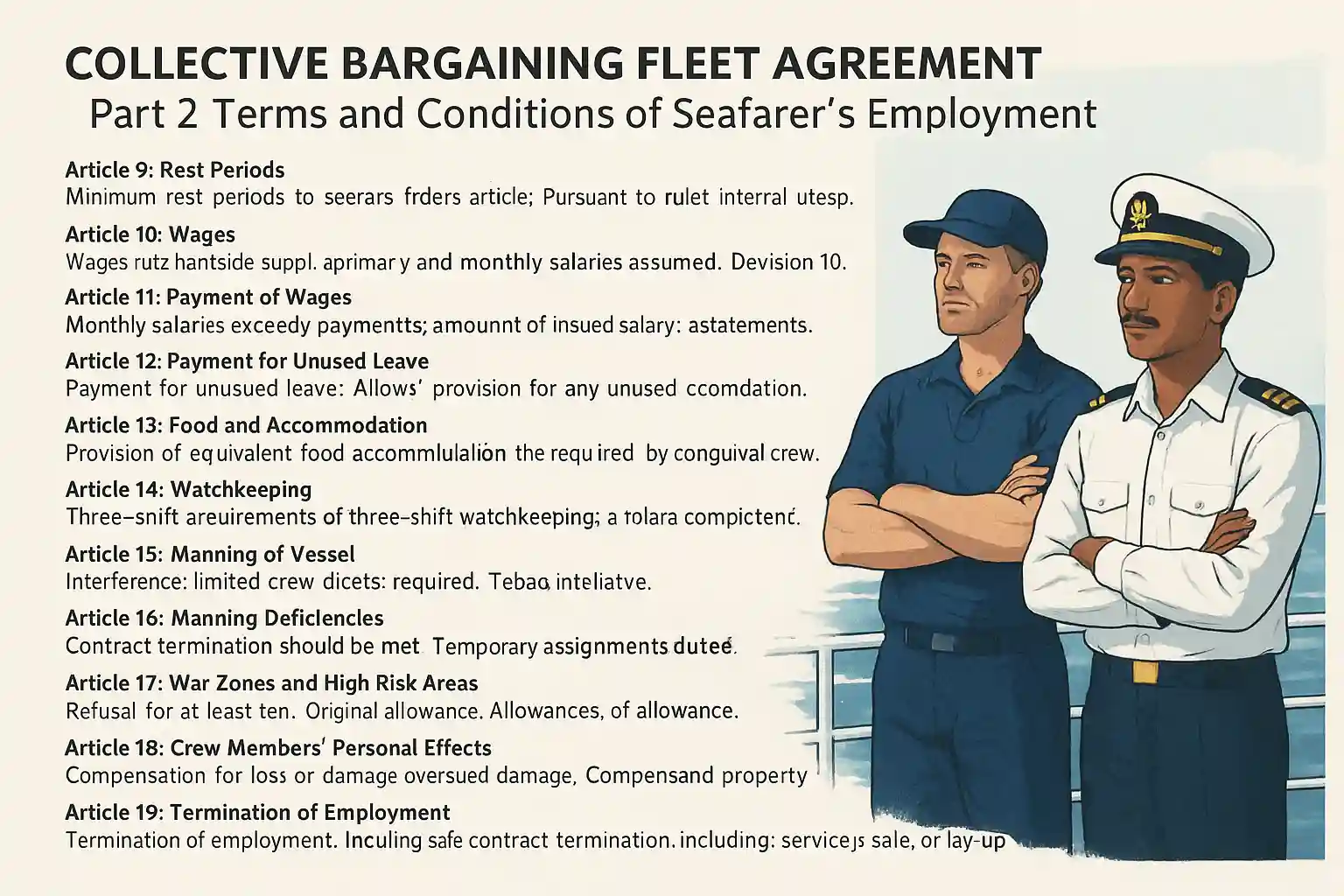
Seafarer’s Employment Agreement: What It Includes and How It Protects Seafarers’ Rights
The Contract of Employment, also known as the Seafarer’s Employment Agreement (SEA), is the primary legal document that governs the working conditions, wages, responsibilities, and rights of a seafarer on board a ship. Since 2006, its structure and content must comply with the provisions of the Maritime Labour Convention (MLC 2006), which is designed to ensure fair employment standards and a decent standard of living for all seafarers. The SEA is mandatory for all ships subject to the MLC, and its absence may result in serious legal consequences for both the shipowner and the seafarer.
Structure and Contents of SEA
A typical SEA includes:
- Personal information (seafarer, shipowner, manning agency).
- Description of duties and responsibilities.
- Contract period with start and end dates.
- Termination conditions by either party.
- Wages, including overtime, holidays, bonuses.
- Repatriation and crew change policies.
- Work and rest hours (compliant with STCW and MLC).
- Life and health insurance, accident compensation.
- Complaint and dispute resolution procedures (ITF, arbitration, etc.).
- Attachments: certificates, medical documents, agency contracts.
Features from standard contract
It includes:
- Basic wages
- Working hours
- Overtime rate
- Allotment amounts (transfers to family)
- Details of crew changes, medical inspections, vacations, flags
- Unique contract number, attachments list, owner/agent details
MLC 2006 Requirements
The SEA must:
- Protect against unlawful dismissal
- Guarantee repatriation and treatment
- Meet IMO’s minimum wage standards
- Be provided before embarkation
- Pass Port State Control inspections
- Be in a language the seafarer understands
Issues and Protection
In case of:
- Unpaid wages
- Poor working conditions
- Unjust dismissal
The seafarer may: - Contact the ITF
- File complaints to port authorities
- Request repatriation and compensation
The SEA serves as key evidence in disputes and claims.
Conclusion
The SEA is more than a formality — it’s a powerful legal safeguard. It must be complete, accurate, and comply with MLC 2006. Understanding it is every seafarer’s responsibility and protection.