Machine translation from English source
For the purposes of the Safety and Quality Management System, the following definitions apply:
Administration
means the relevant flag State administration for the ship,
means the organization subject to audit.
Auditor
Refers to the person who conducts the audit.
CBA
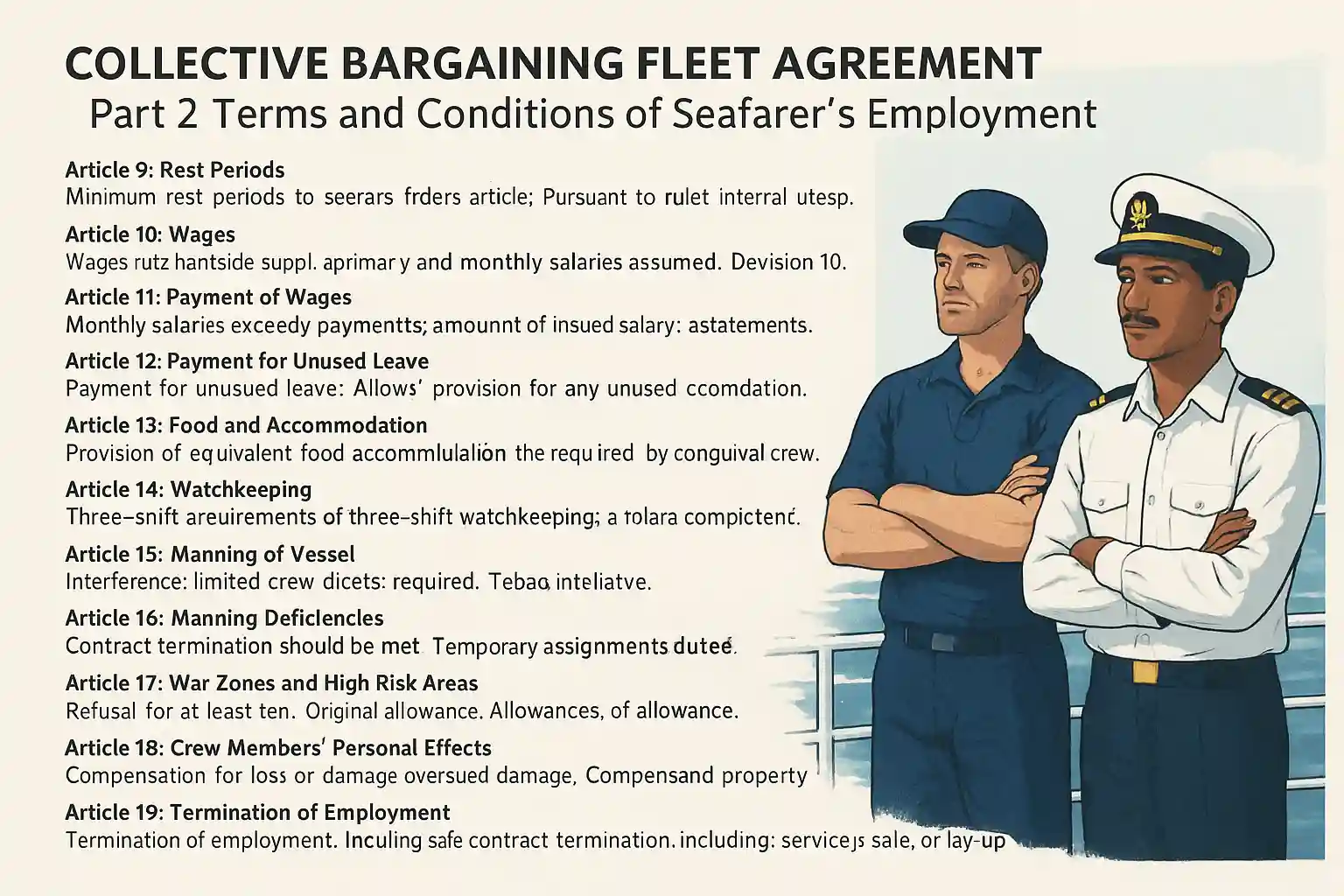
A collective bargaining agreement is an agreement on working conditions agreed upon by a union on behalf of a group of seafarers.
Company
Means the owner of the ship or any other party or person, such as a manager, or bareboat charterer, who has assumed responsibility for the operation of the ship.
Competent authority
means the minister, government department or other authority authorized to make and enforce regulations, orders or other instructions having the force of law with respect to the subject matter of the provision;
Corrective action (start on tanker)
Refers to action taken to eliminate the causes of an existing undesirable condition in order to minimize or prevent its recurrence.
Defect Indicates a technical malfunction of a housing element, equipment or mechanisms.
Designated Person (DPA or DP)
The designated person is responsible for ensuring that the security aspects of the ISM Code System are met to ensure the safe operation of each vessel and to ensure communications between the Organization and those on board the vessels.
DMLC
The Maritime Labor Declaration of Compliance is a document attached to the maritime labor certificate that must be carried on board MLC certified vessels.
Document of conformity (DOC, start on tanker)
Refers to a document issued to a company that complies with the requirements of the ISM Code.
Indicates a situation that could result in an accident or pollution incident, sometimes called a "near miss".
Rest hours
Refers to the period during which a seafarer can freely manage his time and movements. Meal breaks taken during working hours are not considered “rest hours”.
ISM Code
Refers to the International Safety Management Code adopted by IMO as resolution A.741(18)
MLC Maritime Labor Convention, 2006
Serious non-compliance
Means an identifiable deviation that poses a serious threat to the safety of personnel or the ship or a serious risk to the environment that requires immediate corrective action and includes failure to effectively and systematically implement the requirements of this Code.
Non-conformity (or) minor non-conformity
Refers to an observed situation where objective evidence indicates that a specified requirement has not been met. Refers to a deviation from the requirements specified in the safety management system, or an error, or any identified lack of plan or instruction for a key operation of the ship, which could jeopardize the safety of people, the ship, its cargo and the environment.
Objective evidence (start on tanker)
Means quantitative or qualitative information, records or factual information relating to safety or to the existence and implementation of a safety and quality management system element/standard that is based on observation, measurement or testing and that can be verified.