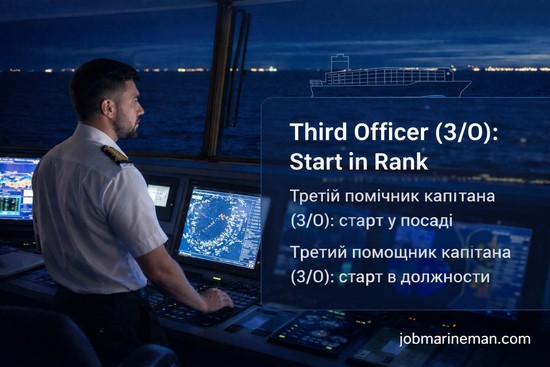
Third Officer (3/O): Start in Rank and Foundation of a Maritime Career
The position of Third Officer (3/O) is the first real step into the bridge officer team. This is where theory ends and real responsibility begins — for navigation, vessel safety, and the crew.
Transitioning to a Third Officer position is possible through two main paths:
from Deck Cadet
from ratings (AB, OS)
In both cases, this is one of the most challenging stages in a maritime career. The workload increases significantly, and the cost of mistakes becomes critical.
For former cadets, it is a shift from training to full responsibility. For seafarers from the ratings, it is a transition from execution to decision-making and documentation.
Role of the Third Officer: Navigation and Safety
If the Captain defines strategy and the Chief Officer manages operations, the Third Officer ensures control and safety in daily vessel operations.
This is a key role where the foundation for future promotion to Chief Officer and Captain is built.
Main Responsibilities of a Third Officer
Bridge Watchkeeping Monitoring vessel movement, complying with COLREG, and maintaining situational awareness.
Navigation Equipment Operation Working with ECDIS, Radar, AIS, GPS, and other systems.
Ship Documentation Maintaining logs, checklists, and reports.
Responsibility for Life-Saving Appliances (LSA) Lifeboats, liferafts, lifejackets, and related equipment.
Fire-Fighting Equipment (FFA) Control Inspections, drills, and readiness.
Participation in Cargo Operations
Preparation for PSC Inspections and Audits
Risks and Responsibility Level
Navigational Risks
route planning errors
incorrect use of ECDIS
violation of COLREG
Operational Risks
documentation mistakes
poor equipment control
operational errors
Transition Risks
Especially for those moving from ratings:
lack of decision-making experience
difficulty with documentation
shift from executor to responsible officer
This stage often defines the future career path.
STCW Requirements: Required Certification
The position is regulated by International Maritime Organization and the STCW Convention.
Certificate of Competency: Officer in Charge of a Navigational Watch (STCW II/1)