test
You have no notifications yet
Rank
Fleet
Vessel type
Citizenship
Additionally
Filter
Sort

Passenger Fleet Jobs

Found:

Unfortunately, nothing was found as per your request

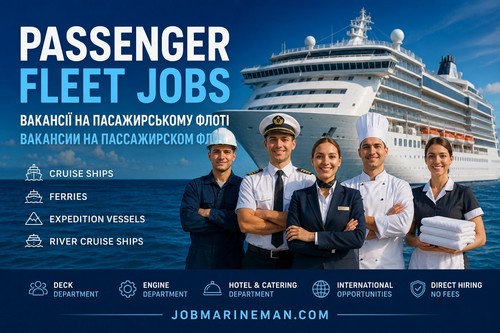
Passenger Fleet Jobs Вакансии на пассажирском флоте.jpg
Passenger Fleet — Cruise Ships, Ferries & Expedition Vessels

Passenger Fleet includes cruise ships, ferries, Ro-Pax vessels, expedition ships, and river cruise vessels where maritime careers combine with international travel and lifestyle. Caribbean itineraries in winter, Mediterranean cruises in summer, Alaska, Norwegian fjords, Arctic and Antarctic expeditions — one of the few maritime sectors where work truly meets global experience.Passenger shipping is unique because it requires not only seafarers, but also hotel and hospitality professionals: cooks, stewards, bartenders, plumbers, electricians, HVAC technicians, housekeeping staff, laundry staff, and medical personnel.JobMarineMan helps seafarers and hotel staff find direct employment with Shipowners without intermediaries, agency commissions, or hidden fees.View All Passenger Fleet Vacancies

How Passenger Fleet Differs from Cargo Shipping

Passenger shipping is far more than transportation. Modern cruise ships operate as floating hotels, restaurants, entertainment centers, and transportation systems at the same time. This creates a completely different crew structure and operational environment.Main features of passenger fleet operations:

  • passenger safety is the highest priority;
  • vessels may carry over 6,000 passengers and 2,000 crew members;
  • large Hotel Departments onboard;
  • mandatory passenger STCW certificates;
  • shorter rotations;
  • entry opportunities for shore-based specialists;
  • tips for hotel staff;
  • strict USPH and SHIPSAN sanitary standards.

Main Types of Passenger Vessels

Ocean Cruise Ships

Cruise vessels are the largest segment of the passenger industry. These ships include restaurants, swimming pools, theaters, SPA complexes, casinos, shopping areas, and medical centers.Cruise companies actively hire:

  • Deck Officers;
  • Engine Officers;
  • ETOs;
  • Electricians;
  • Plumbers;
  • HVAC specialists;
  • Cooks;
  • Stewards;
  • Waiters;
  • Bartenders;
  • Hotel staff.

Cruise itineraries include:

  • Caribbean;
  • Mediterranean;
  • Northern Europe;
  • Alaska;
  • Southeast Asia;
  • World cruises.

Contracts usually last between 4 and 8 months.View Cruise Ship Jobs

Ferries & Ro-Pax Vessels

Ferries are one of the most comfortable segments for family-oriented seafarers because of shorter rotations and stable routes.Main types include:

  • passenger ferries;
  • Ro-Pax vessels;
  • overnight ferries.

Typical rotations range from 2 to 4 weeks, allowing crew members to spend more time at home.Ferry operators hire:

  • deck crew;
  • engine crew;
  • cooks;
  • stewards;
  • cleaners;
  • electricians;
  • hotel staff.

View Ferry Jobs

Expedition Vessels

Expedition ships operate in the Arctic, Antarctic, and remote global regions. This is a premium segment with high safety standards and demanding operational conditions.Main characteristics:

  • ice-class vessels;
  • Polar Code operations;
  • smaller crews;
  • premium salaries;
  • challenging navigation.

Companies often search for experienced officers, engineers, ETOs, and hotel specialists.

River Cruise Ships

River cruise vessels operate along the Danube, Rhine, Seine, and other European waterways.Main advantages:

  • smaller crews;
  • calm working atmosphere;
  • European service standards;
  • shorter routes;
  • stable contracts.

Check Any Vessel in Global Vessel Database

Most In-Demand Positions

Deck Department

Passenger fleet companies actively recruit:

  • Master / Captain;
  • Chief Officer;
  • Second Officer;
  • Third Officer;
  • Junior Officer;
  • AB;
  • OS;
  • Bosun.

Salaries depend on company, nationality, vessel type, trading area, and contract terms.Deck Department Vacancies

Engine Department

The Engine Department onboard cruise vessels is often far more complex than on standard cargo ships.Companies hire:

  • Chief Engineer;
  • Second Engineer;
  • Third Engineer;
  • Fourth Engineer;
  • ETO;
  • Electrician;
  • Oiler;
  • Wiper;
  • HVAC specialists.

Large cruise ships use:

  • HV systems;
  • entertainment systems;
  • elevator systems;
  • advanced HVAC systems;
  • modern automation technologies.

Engine Department Vacancies

Hotel & Catering Department

Hotel Department is the key difference between passenger vessels and cargo ships.Most demanded positions:

  • Chef;
  • Cook;
  • Steward / Stewardess;
  • Bartender;
  • Waiter;
  • Housekeeping;
  • Laundry staff;
  • Reception staff;
  • Plumber;
  • Electrician;
  • HVAC technician;
  • Medical staff.

Many hotel employees receive tips that may significantly increase total income.Submit CV for Passenger Fleet Jobs

Documents & STCW Certificates for Passenger Vessels

Working onboard passenger vessels normally requires:

  • Passport;
  • Seaman’s Book;
  • Medical Certificate;
  • STCW Basic Safety Training;
  • Crowd Management;
  • Passenger Safety certificates;
  • professional certificates according to position.

For officers and senior staff, companies may additionally require:

  • Crisis Management;
  • Passenger Safety & Cargo Safety;
  • Advanced Fire Fighting;
  • GMDSS;
  • ECDIS;
  • Polar Code training for expedition vessels.

Mandatory Passenger Certificates

For all crew members:

  • STCW V/2-1 — Safety Familiarization;
  • STCW V/2-2 — Crowd Management.

For officers and senior staff:

  • STCW V/2-3 — Crisis Management and Human Behaviour;
  • STCW V/2-4 — Passenger Safety, Cargo Safety and Hull Integrity.

For hotel department personnel:

  • STCW BST;
  • Crowd Management;
  • professional certificates.

Cruise vessels operating in the United States must also comply with USPH standards.Submit CV for Cruise Ship Vacancies

SOLAS, Crowd Management & Passenger Safety

Passenger Fleet is the only shipping sector where crews are directly responsible for thousands of civilian passengers.Cruise operations heavily depend on:

  • evacuation procedures;
  • crowd management;
  • fire safety;
  • emergency response;
  • passenger drills;
  • SOLAS compliance.

Every crew member must understand their responsibilities during emergency situations.

Advantages of Passenger Fleet Careers

Passenger Fleet remains one of the most attractive sectors in the maritime industry because of:

  • international atmosphere;
  • travel opportunities;
  • shorter rotations;
  • shore-to-sea career entry;
  • strong career growth;
  • tips for hotel staff;
  • employment with major international companies.

Passenger Fleet is especially suitable for:

  • young seafarers;
  • hotel staff;
  • shore-based specialists;
  • family-oriented seafarers;
  • experienced officers and engineers.

Who Passenger Fleet Is Best For

Young Seafarers

Passenger vessels provide intensive practical experience through:

  • frequent port calls;
  • maneuvering operations;
  • safety drills;
  • passenger operations.

Hotel Staff

This is one of the best maritime sectors for:

  • cooks;
  • stewards;
  • bartenders;
  • waiters;
  • housekeeping staff.

Technical Specialists

Cruise operators actively recruit:

  • electricians;
  • plumbers;
  • HVAC technicians;
  • refrigeration specialists;
  • automation specialists.

Family-Oriented Seafarers

Ferries and regional passenger vessels provide shorter rotations and more time at home.

How to Choose the Right Vacancy

When selecting passenger fleet jobs, it is important to consider:
  • vessel type;
  • rotation schedule;
  • tipping policy;
  • trading routes;
  • company standards;
  • USPH / SHIPSAN inspections;
  • crew size;
  • contract terms.

Before applying, it is recommended to verify:

  • the vessel;
  • the Shipowner;
  • fleet history;
  • reviews;
  • PSC history.

Check Vessel in Global Vessel DatabaseCheck Shipowner in Shipowners DirectoryGet Career Advice from Maritime Mentors

Major Cruise & Ferry Companies

Among the largest cruise operators:

  • Royal Caribbean;
  • MSC Cruises;
  • Carnival;
  • Norwegian Cruise Line;
  • Celebrity Cruises;
  • Disney Cruise Line.

Major ferry operators:

  • Stena Line;
  • Viking Line;
  • DFDS;
  • Tallink Silja;
  • Irish Ferries;
  • Brittany Ferries.

Why Seafarers Choose JobMarineMan

JobMarineMan is a digital ecosystem for direct maritime hiring.Platform advantages:

  • direct contact with Shipowners;
  • no intermediaries;
  • no agency fees;
  • daily vacancy updates;
  • company verification;
  • international vacancies;
  • cruise, ferry, expedition, and river fleet jobs;
  • opportunities for deck, engine, and hotel departments.

View All Passenger Fleet Vacancies

FAQ

What is Passenger Fleet?

Passenger Fleet includes cruise ships, ferries, expedition vessels, and river cruise ships.

Can I join without maritime experience?

Yes. Hotel staff and some technical specialists may start after completing required STCW courses.

What documents are required?

Usually required:

  • Passport;
  • Seaman’s Book;
  • Medical Certificate;
  • STCW BST;
  • Crowd Management;
  • professional certificates.

What is the usual rotation on cruise vessels?

Normally between 4 and 8 months.

What is the rotation on ferries?

Usually 2–4 weeks.

What is Crowd Management?

A mandatory STCW course for passenger vessels focused on evacuation procedures and passenger control during emergencies.

How does Passenger Fleet differ from Cargo Fleet?

Passenger Fleet includes:

  • Hotel Departments;
  • larger crews;
  • passenger certificates;
  • shorter rotations;
  • strict passenger safety standards.

Can shore-based specialists join cruise ships?

Yes. Cruise companies actively recruit:

  • cooks;
  • stewards;
  • bartenders;
  • electricians;
  • plumbers;
  • HVAC specialists.

Other Fleet Types

Dry Cargo Fleet
Tanker Fleet
Gas Fleet LNG / LPG
Offshore Fleet
Yacht Sector

JobMarineMan Services

Maritime Mentors
Shipowners Directory
Global Vessel Database