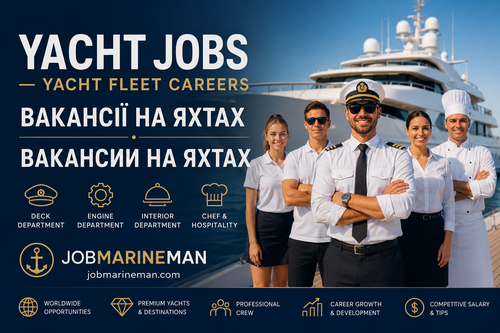
The yacht industry is a premium segment of the maritime sector: superyachts, megayachts, sailing yachts and motor yachts with crews ranging from 5 to 80+ people. Positions include Captain, Chief Engineer, ETO, Deckhand, Stewardess, Bosun, Yacht Chef and Interior Crew.Working on superyachts means Monaco, Saint-Tropez, the Caribbean, the Maldives, the Mediterranean and a high-end lifestyle onboard. Unlike the commercial fleet, the yacht sector values not only maritime experience and certificates, but also appearance, soft skills, discipline, service standards and attention to detail.JobMarineMan helps seafarers find yacht jobs directly from yacht owners and yacht management companies — with no manning agents, hidden commissions or recruitment fees.View All Yacht Vacancies
How the Yacht Industry Differs from the Commercial Fleet
The yacht sector operates differently from the dry cargo, tanker or offshore industry. A yacht is usually privately owned or operated by a charter company, and the crew’s mission is to provide safety, comfort and premium service for owners and guests.
Key Differences
Service is the main KPI. On commercial ships, companies focus on cargo operations and vessel performance. On yachts, owner and guest satisfaction is the priority.Smaller crew — greater responsibility. A 30–50 meter yacht may operate with only 6–12 crew members, meaning every person often handles multiple tasks.Tips and gratuities. On charter yachts, crew gratuities can significantly increase annual income.Flexible schedules. Yachts may remain in a marina for months or depart on long voyages. Rotations depend on the owner, season and charter schedule.Appearance and behavior matter. Dress code, grooming standards, communication skills and professionalism strongly affect hiring decisions.
Types of Yachts
Motor Yachts
Motor superyachts are the largest segment of yacht jobs. These vessels range from 30 to 100+ meters and employ deck crew, engine crew and interior staff.On 30–50 meter yachts, crews are usually compact. A Single Engineer may manage all technical systems, while a Deckhand combines maintenance, tender driving and guest assistance.On 50–80 meter yachts, departments become more structured: deck, engine and interior teams. Positions such as Chief Officer, Chief Engineer, ETO, Chief Stewardess and Yacht Chef are common.Megayachts over 80–100 meters operate similarly to luxury cruise vessels with full hierarchies including Captain, officers, engineers, hotel department, purser, medic and service teams.
Sailing Yachts
Sailing yachts require specialized experience with rigging, sail handling and navigation under sail. For Deckhands, sailing knowledge is a major advantage.
Explorer Yachts
Explorer yachts are a fast-growing segment operating in remote destinations such as Antarctica, the Arctic, the Galápagos and Papua New Guinea. These vessels require autonomous crews with strong technical and operational skills.
Charter Yachts
Charter yachts host guests on weekly or monthly luxury charters. The pace is intense, with frequent guest turnover, high service expectations and some of the best gratuities in the industry.
Most востребованные Positions on Yachts
Deck Department
Captain — responsible for navigation, safety, crew management and communication with the owner or management company.Chief Officer / Mate — oversees navigation, safety procedures, inspections and deck operations.Bosun — supervises deck crew, tenders, water toys and maintenance.Deckhand — handles cleaning, polishing, tender driving, watersports equipment and guest support.Explore Deck Department Jobs
Engine Department
Chief Engineer — responsible for technical operations, maintenance and engine room safety.2nd Engineer — supports the Chief Engineer and maintains onboard systems.ETO — manages AV systems, smart technologies, CCTV, IT and navigation electronics.Single Engineer — sole engineer on smaller yachts handling all technical systems.View Engineering & ETO Vacancies
Interior Department
Chief Stewardess — manages interior operations, guest cabins, service standards and events onboard.Stewardess — responsible for guest service, housekeeping, laundry and table service.Yacht Chef — prepares restaurant-level cuisine for owners, guests and crew.Purser — handles administration, budgets, customs, visas and documentation.Masseuse / SPA Therapist — provides wellness and spa services onboard luxury yachts.Submit Your CV for Yacht Jobs
Certificates Required for Yacht Jobs
Deck Department
STCW Basic Safety Training — minimum requirement for most yacht positions.RYA / MCA Yachtmaster — important certification for smaller yachts and deck crew.MCA OOW Yachts 3000GT — standard officer certificate for superyachts.MCA Master Yachts 3000GT — qualification for yacht captains.ENG1 Medical — UK medical certificate commonly required in the yacht industry.STCW CoC II/1 or II/2 — accepted on many large megayachts.
STCW Basic Safety Training — required minimum.Food Hygiene Certificate — important for chefs and stewardesses.Silver Service Training — valuable for interior crew.Wine & Beverage Certificates — an advantage for hospitality positions.
Additional Certificates
Powerboat Level 2 / RYA Tender Operator — essential for Deckhands and tender driving.PADI / SSI Divemaster — valuable for yachts offering diving programs.Personal Watercraft Certificate — useful for jet ski and water toy operations.
How to Start a Yacht Career
Transition from the Commercial Fleet
Officers, engineers and ETOs often move into the yacht industry for higher salaries, premium routes and better onboard conditions.
Yacht Courses
Many entry-level crew begin with STCW Basic Safety Training, ENG1 Medical and Powerboat Level 2. This is a common route for Deckhands and Stewardesses.
Hospitality Background
Experience in hotels, restaurants, SPA or luxury hospitality can help candidates enter interior crew positions.
From Cruise Ships
Stewards, chefs and hotel crew from passenger vessels often transition successfully into the yacht industry.
Where to Find Your First Yacht Job
The main yacht hubs are Antibes, Palma de Mallorca, Fort Lauderdale, Monaco, Barcelona and Genoa. Many junior crew members begin with day work such as cleaning, polishing and preparing yachts in marinas.Through JobMarineMan, candidates can apply remotely and connect directly with yacht employers worldwide.Upload Your CV for Yacht Jobs
Yacht Salaries
The yacht industry offers some of the highest salaries for junior maritime positions and hospitality crew.Deckhand — around $2,500–3,500/month + tips.Bosun — around $3,500–5,500/month + tips.Stewardess — around $2,500–3,500/month + tips.Chief Stewardess — around $4,500–7,000/month + tips.Yacht Chef — around $4,000–12,000+/month + tips.Single Engineer — around $4,000–7,000/month + tips.ETO — around $4,500–7,000/month + tips.Chief Engineer — around $7,000–18,000+/month + tips.Captain — around $8,000–25,000+/month + tips.View Yacht Vacancies with Salaries
Advantages of Working on Yachts
High salaries even for junior crew positions.Additional income through charter gratuities.Dream destinations: Monaco, Sardinia, the Caribbean, the Maldives and the Mediterranean.Premium living conditions and smaller onboard teams.Career growth opportunities: Deckhand → Bosun → Mate → Captain.Stewardess → Chief Stewardess → Purser → Yacht Manager.
Find Yacht Jobs with JobMarineMan
JobMarineMan connects seafarers with verified yacht owners, yacht management companies and maritime employers worldwide.The platform features vacancies for deck crew, engine crew, ETOs, interior staff, chefs, stewardesses, pursers and many other yacht industry professionals.Browse All Yacht Vacancies
FAQ
What is the yacht industry?
The yacht industry is the premium sector of maritime employment involving superyachts, megayachts, sailing yachts and motor yachts with professional crews.
What salaries do yacht crews earn?
Deckhands may earn $2,500–3,500 plus tips, while Captains on megayachts can earn $25,000+ per month depending on yacht size and operations.
Can I join the yacht industry without maritime experience?
Yes. Many candidates start as Deckhands or Stewardesses after completing STCW Basic Safety Training and ENG1 Medical.
Which certificates are required?
STCW Basic Safety Training is the minimum. Additional certificates such as MCA Yachtmaster, Powerboat Level 2 and MCA engineering qualifications improve employment opportunities.
How is yacht work different from commercial shipping?
Yachts have smaller crews, stronger focus on guest service, flexible schedules, gratuities and luxury destinations.
Can commercial fleet officers move to yachts?
Yes. Officers, engineers and ETOs from merchant vessels are highly valued, especially on large megayachts.
What is day work?
Day work is temporary daily work on yachts in marinas involving cleaning, polishing, painting and maintenance. It is a common entry point into the yacht industry.
How can I apply quickly?
Upload your CV on JobMarineMan and apply directly to yacht vacancies worldwide.Submit Your CV