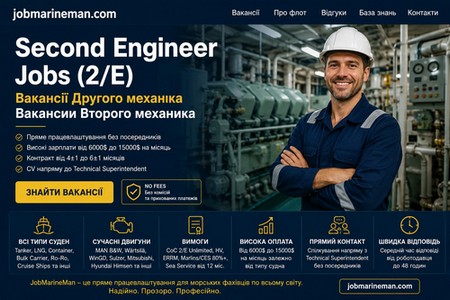
The Second Engineer is responsible for executing the Planned Maintenance System (PMS) and supervising the engine team — 3/E, 4/E, and Motormen. Key areas of responsibility include:
Main Engine & Auxiliaries — maintenance of MAN B&W, Wärtsilä, WinGD main engines and auxiliary diesel generators
Fuel & Lubes — operation of Alfa Laval / Westfalia separators and fuel treatment systems
High Voltage (HV) — operation of 6.6 kV and 11 kV systems onboard modern vessels
Compliance — MARPOL compliance, Oil Record Book management, EEXI / CII reporting
What Vessel Types Offer Second Engineer Vacancies
Tankers, Chemical Tankers & LNG Carriers
The highest-paid segment. Requires Basic / Advanced Tanker certificates, SIGTTO endorsements for gas carriers, DFDE and ME-GI experience. Compliance with SIRE 2.0 and OCIMF standards is essential. Open LNG fleet vacancies
Container Vessels
Experience on ULCV (Ultra Large Container Vessels) above 10,000 TEU is highly valued. Focus on high-powered main engines and reefer systems. Current container vessel vacancies
Besides the main engine, responsibilities include HVAC, freshwater systems, electrical networks, and sewage treatment plants. Contracts are usually shorter — around 4±1 months.
Engine Experience Most Valued for Second Engineers
Shipping companies highly value experience with the following engines:
MAN B&W — including electronic ME-C and dual-fuel ME-GI engines
Wärtsilä — RT-flex, X-DF (for LNG)
WinGD — X-DF, X-DF2.0
Sulzer — classic RTA and RT-flex series
Mitsubishi — UEC / UE series
Hyundai Himsen — auxiliary diesel generators
Experience with electronic engines (ME-C, X-DF), dual-fuel LNG systems, and high-voltage equipment significantly increases salary level and speeds up response from Technical Superintendent.
Second Engineer Salaries by Fleet Type (Market Rates)
Compensation depends on experience with specific engine types (ME-C, RT-flex, X-DF), flag, and vessel class:
Minimum 12 months sea service as 3/E on “quality vessels”, completed administration exams, and completed HV course. Open Third Engineer vacancies
Second Engineer → Chief Engineer
Usually requires 24–36 months in rank as 2/E, advanced CoC, and experience with various engine types and systems. Current Chief Engineer vacancies
Career progression can be accelerated with guidance from senior-ranked marine engineer mentors through the Be Mentor program
Why Choose Direct Hiring on JobMarineMan
At the 2/E level, understanding the vessel’s technical condition before signing a contract is critical. The platform provides:
Technical Data — vessel verification by IMO: engine type, PSC history, fleet age Vessel Database
Direct Contact — discuss engine specifics and repair plans directly with Technical Superintendent
No Fees — no hidden agency commissions or deposits
48-hour Feedback — average response time for direct hiring
Frequently Asked Questions
Can I become a 2/E with minimal experience?
Most shipowners require at least 12 months of pure sea service as 3/E on “quality vessels”. LNG and large container fleets usually require 18+ months.
Is High Voltage mandatory for Second Engineers?
For container vessels above 10,000 TEU and all modern LNG carriers — yes. Without a valid HV certificate, applications are usually rejected automatically.
How quickly do employers respond to applications?
With direct hiring through JobMarineMan, the average response time from Technical Superintendent is around 48 hours.
Can I receive vacancies for specific engine types?
Yes. Your profile can include experience with MAN B&W ME-C, Wärtsilä RT-flex, and WinGD X-DF engines, allowing the algorithm to match relevant vacancies.
Does the employer pay for travel and certificates?
In most cases — yes. Flights, transfers, visas, and vessel-specific endorsements are usually covered by the employer. This is standard practice in direct maritime hiring.