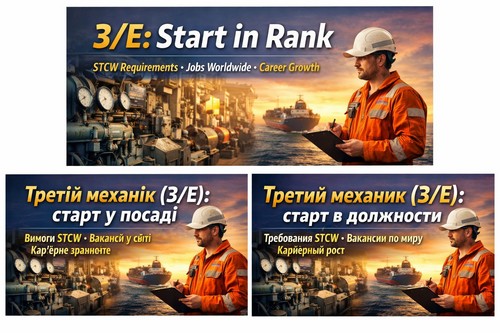
Starting as a Third Engineer: Transition to Real Responsibility
Moving from 4th Engineer to 3rd Engineer is not just a change in your endorsement. It is a turning point where execution ends and real technical responsibility begins.
If previously you were completing assigned tasks, now you are responsible for the outcome. Your decisions directly impact the vessel’s power stability, operational safety, and downtime prevention.
4/E → 3/E: What Actually Changes
The position of Third Engineer is a shift from task execution to lifecycle management of machinery.
Key changes:
Income growth: +20–35% salary increase on average
Responsibility: assigned ownership of systems (Person in Charge)
Team management: direct supervision of Motormen and Oilers
Planning involvement: working closely with the 2nd Engineer on PMS, bunkering, and repairs
Technical accountability: responsible not for the process, but for the result
Area of Responsibility: Critical Engine Room Systems
The Third Engineer is no longer a supporting role. This is a position responsible for systems where even minor failure can have critical consequences.
Auxiliary Engines (Generators) Main source of electrical power. Errors in synchronization, overload, or missed maintenance can result in blackout — especially during maneuvering or port operations.
Boilers Maintaining fuel temperature and supporting key operational processes.
FWG and Life-Support Systems Fresh water generation and vessel autonomy.
Fuel System & Purifiers Fuel quality directly impacts the lifespan of the main engine. Mistakes here lead to serious consequences.
Emergency Diesel Generator (EDG) Critical backup system. Must start instantly — no margin for error.
Risks: The Cost of Decisions at 3/E Level
At this level, you become part of the vessel’s risk management system.